now showing
( Programme )
12 Sep 2026
24 Oct 2026
- ,
- ,
- ,
1 / 10
Text
Thibault Aedy’s sculptural practice is rooted in the inherent tension that exists between control and rupture, intention and chance. Pushing materials to their logical limits, Aedy creates works in which precision coexists with instability allowing an object’s physical properties to contribute towards form and outcome. Absolute Contact, Aedy’s first exhibition at CORPUS, situates this paradox as its central thesis. Contact between bodies; artist and material; or artwork and viewer is never absolute, but mediated through material, language and perception. Across the exhibition, this desire for immediacy is set against formal processes that continually resist it. Materials deform, shrink, sag and decay; repetition breeds inconsistency; carefully established systems produce unpredictable results. Rather than relinquishing control entirely, the works test its limits, establishing precise conditions within which material instability and chance are allowed to assume a central role.
Working primarily with polyurethane, latex and wax, Aedy uses both natural and industrial materials to produce forms that hover between the mechanical and bodily. Repetition evokes the logic of the production line, where individual objects become interchangeable units within a larger system. Here, however, that system breaks down. Variations in curing, density, gravity and material behaviour distort each iteration, producing what Aedy has described as a kind of “pathological seriality”. Industrial processes begin to resemble dysfunctional systems of biological reproduction, generating forms that engageas much with the grammar and language of minimalism as with the warped, unstable or unpredictable nature of biology.
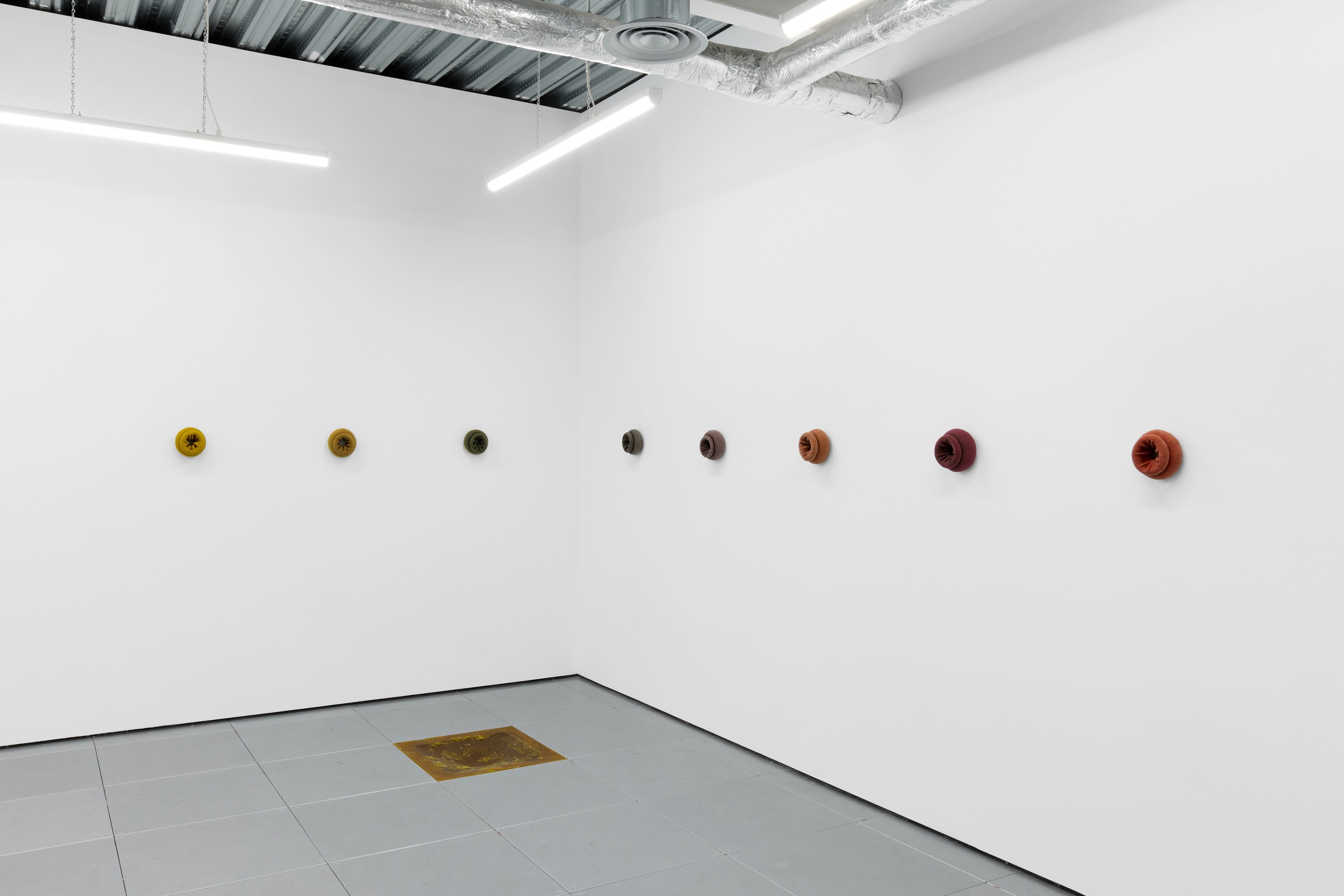
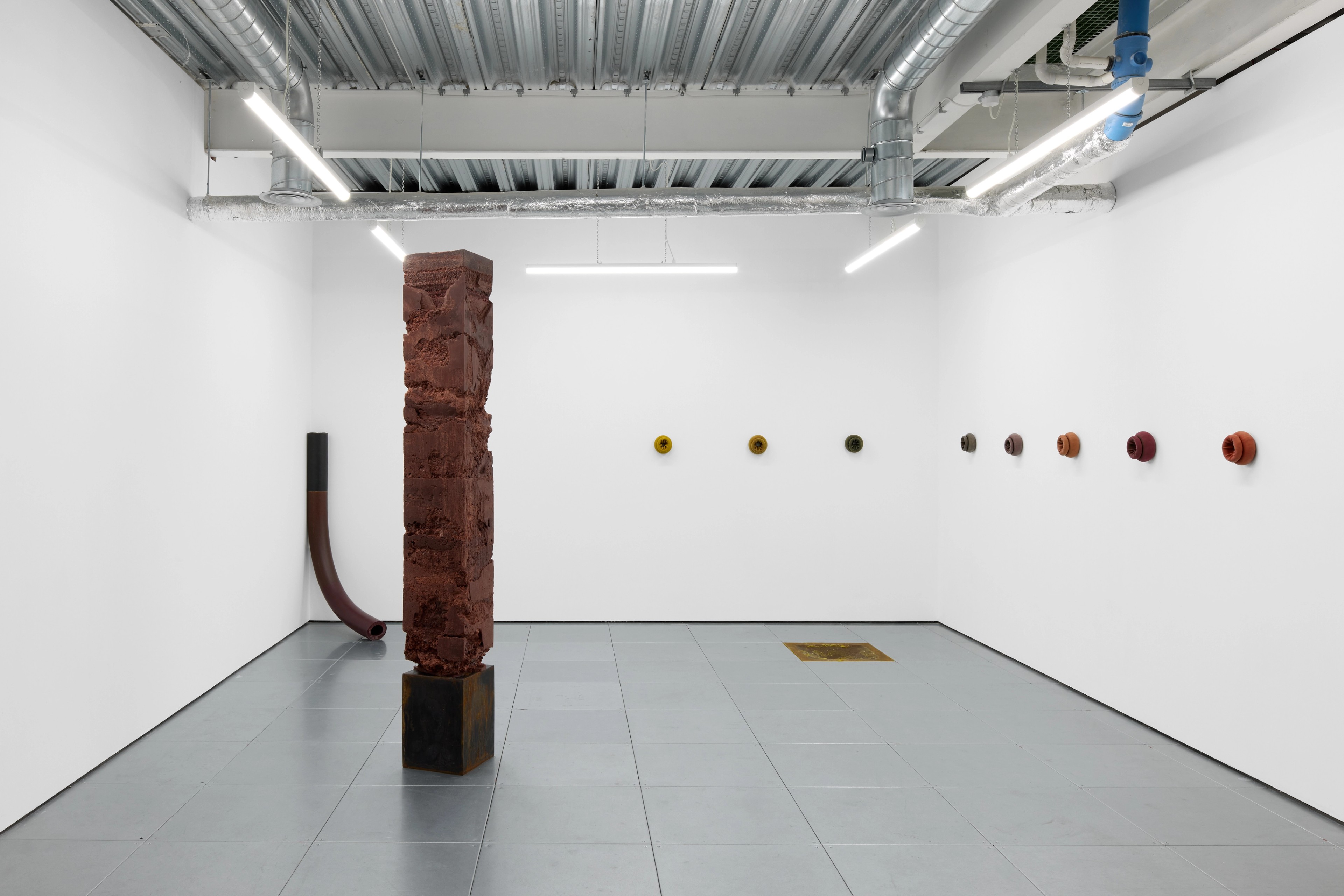
This slippage between anatomy and infrastructure is particularly evident in Terminals, 2026, a series of repeated latex forms produced by painting liquid latex onto PVC pipe before rolling it from the cylindrical mould. Each object consequently retains an opening that recalls the tube from which it originated. “Terminal” belongs equally to anatomical and industrial vocabularies, describing the endpoint of a tubular system, while the forms themselves oscillate between bodily orifice, gasket, outlet, vent or mechanical component. Installed across two walls as a repeated sequence, their slight differences in form and tone frustrate the uniformity implied by their arrangement. The openings suggest both the end of the digestive tract and a perspectival vanishing point, a darkly comic proposition in which introspection becomes a literal act of looking inward.
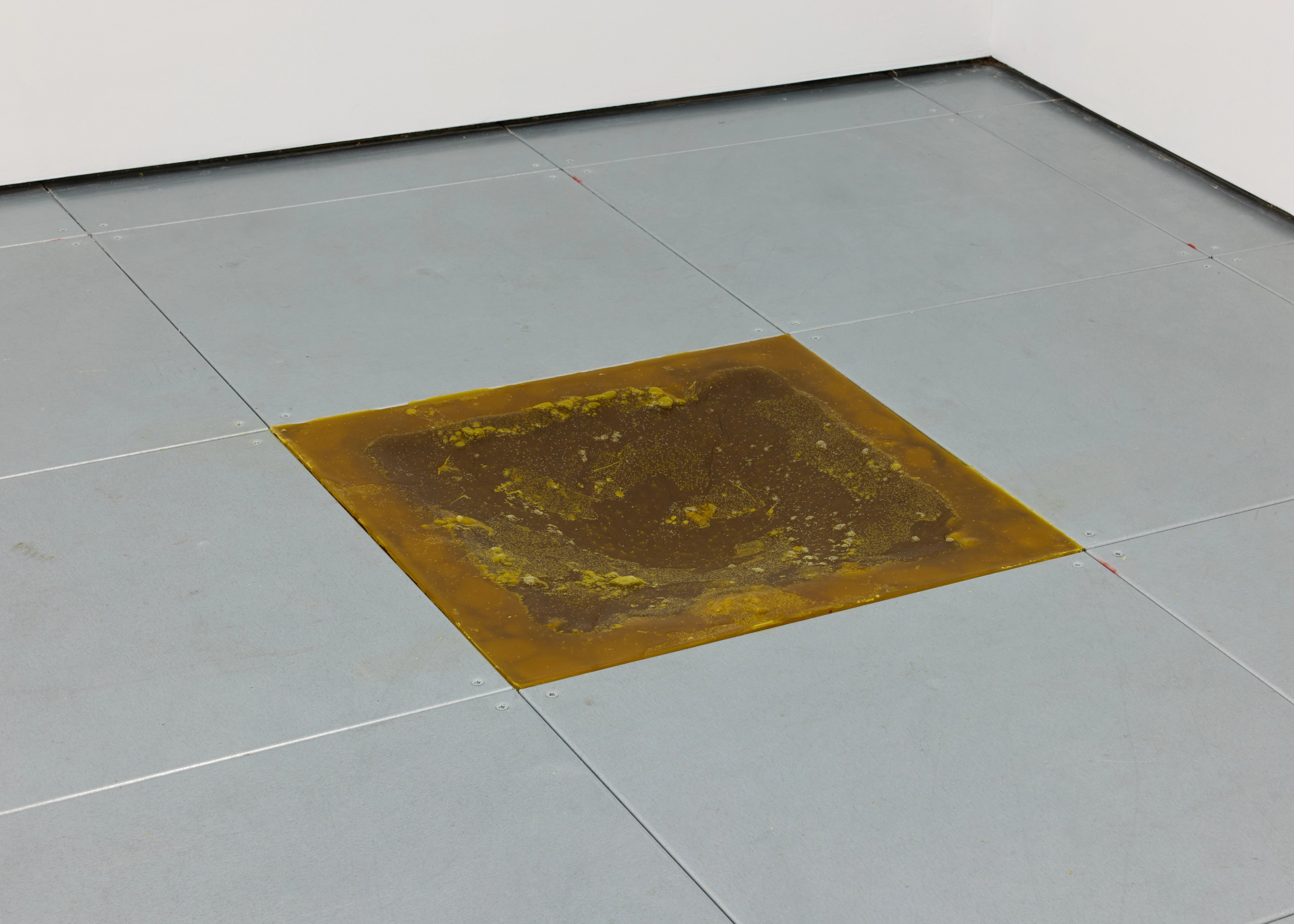
Elsewhere, architectural forms acquire similarly bodily characteristics. In Duct, 2026, a polyurethane tube, proportionally equal to Aedy’s height, follows the junction between wall and floor. Its apparently functional geometry is undermined by the flaccid properties of its material, causing it to slump and sag under its own weight. In Compound Coagulate, 2026, a vertical wax column retains the scale and authority of a monument while abandoning its promise of permanence. Soft, vulnerable to heat and capable of deformation, wax, historically an intermediary material in processes such as lost-wax casting, is presented instead as a final state. Aedy adds equal parts water and molten wax to the mould, resulting in a monumental form whose structural authority is undermined by scars and pock marks reminiscent of flesh. Full, 2026, a site specific intervention in the floor acts as a counterpoint to the totem-like form of Compound Coagulate, 2026. Poured onsite into a mould constructed inside the void beneath the gallery floor, the work highlights a negative space usually hidden from view. Simultaneously revealing and concealing, the work operates as a disordered mass that disrupts the geometrical harmony of the gallery floor.
Humour operates throughout these works as a form of restraint. Bodily associations, impotence and absurdity puncture the seriousness traditionally attached to monumental and minimalist form, drawing the viewer towards objects whose implications become progressively less comfortable. Rather than relying on spectacle, violence or abjection, the exhibition locates confrontation in this quieter instability: forms refuse to settle completely into either humour or discomfort, seduction or repulsion.
Absolute Contact draws upon the material experimentation of Post-Minimalism while maintaining a deliberate distance from the romanticisation of process. Pigment ratios, densities, curing windows, structural loads and anticipated failure points are carefully calculated before material contingency is allowed to intervene. The resulting works neither impose complete order nor simply allow materials to speak for themselves; instead, they emerge from an engineered loss of control. Against a contemporary sculptural tendency towards the readymade and assemblage, Aedy maintains an emphasis on manipulating and transforming raw materials, retaining the evidence of their production within tightly resolved final forms.
Works
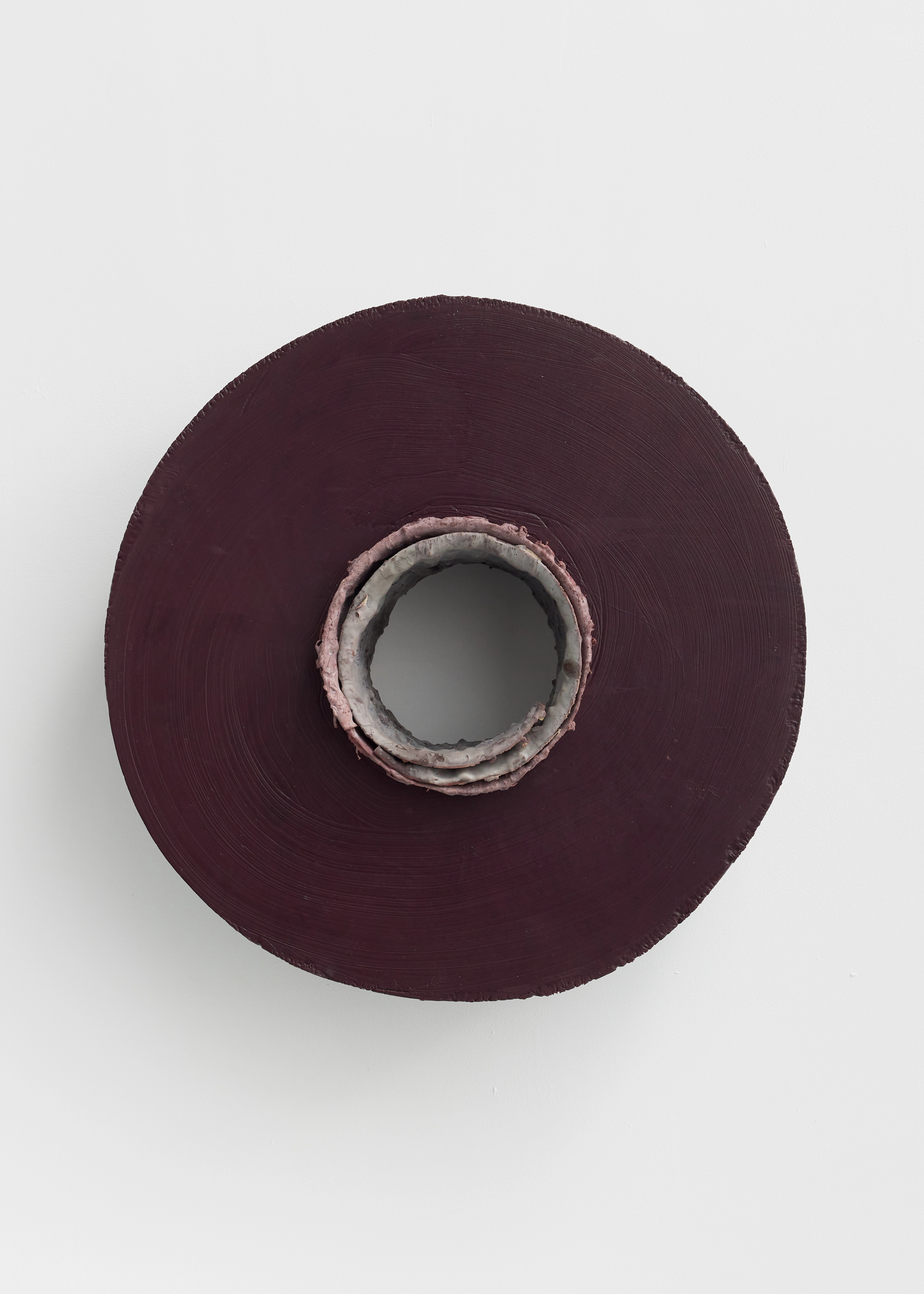
Thibault Aedy,Annulus,2026,Polyurethane, latex,47 x 47 x 18,

Thibault Aedy,Compound Coagulate,2026,Wax, steel,224 x 30 x 30 cm,
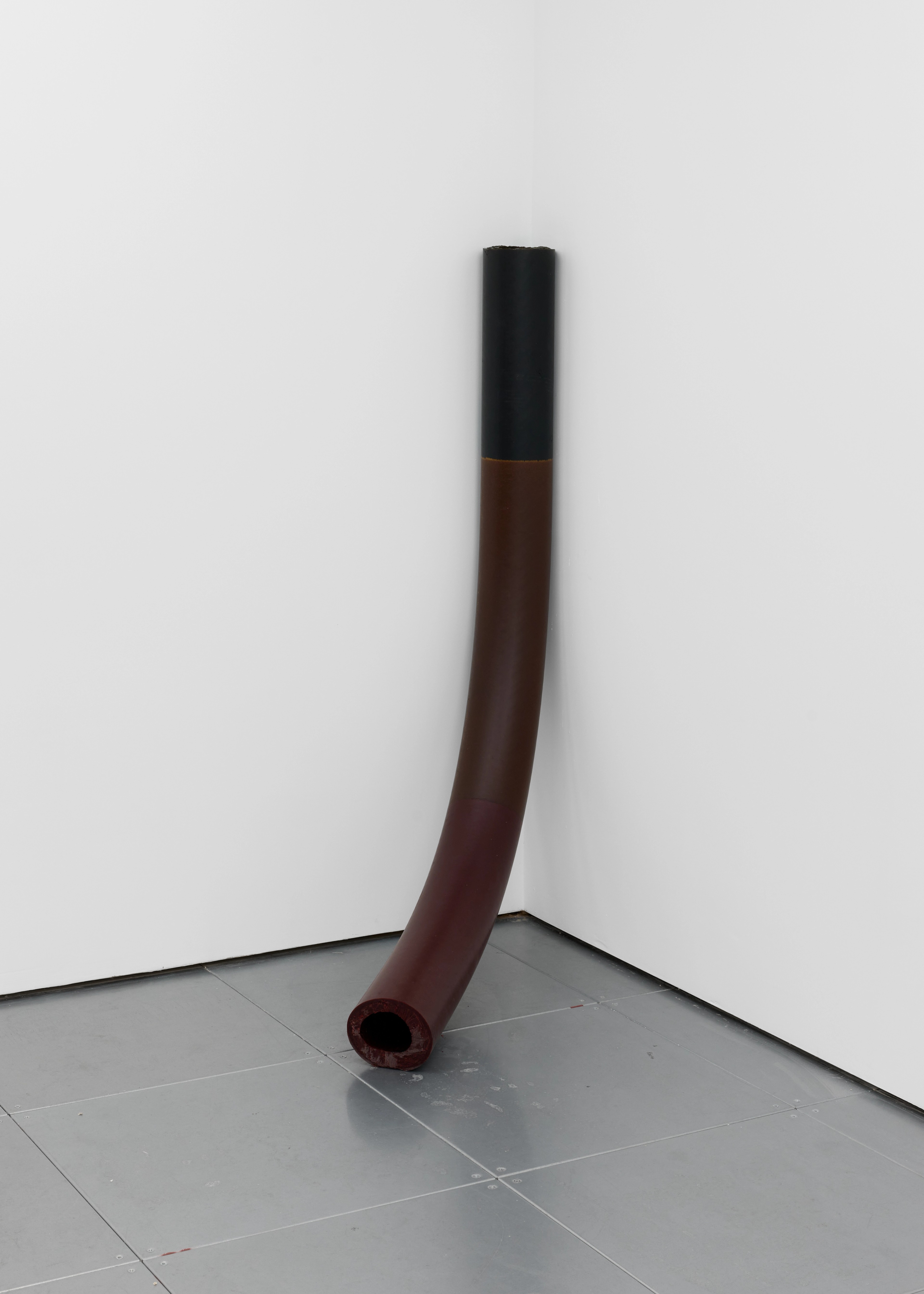
Thibault Aedy,Duct,2026,Polyurethane,149 x 14 x 95 cm,
Thibault Aedy,Terminals,2026,8 latex wall mounted sculptures,Dimensions variable (each: 15 x 15 x 9 cm),